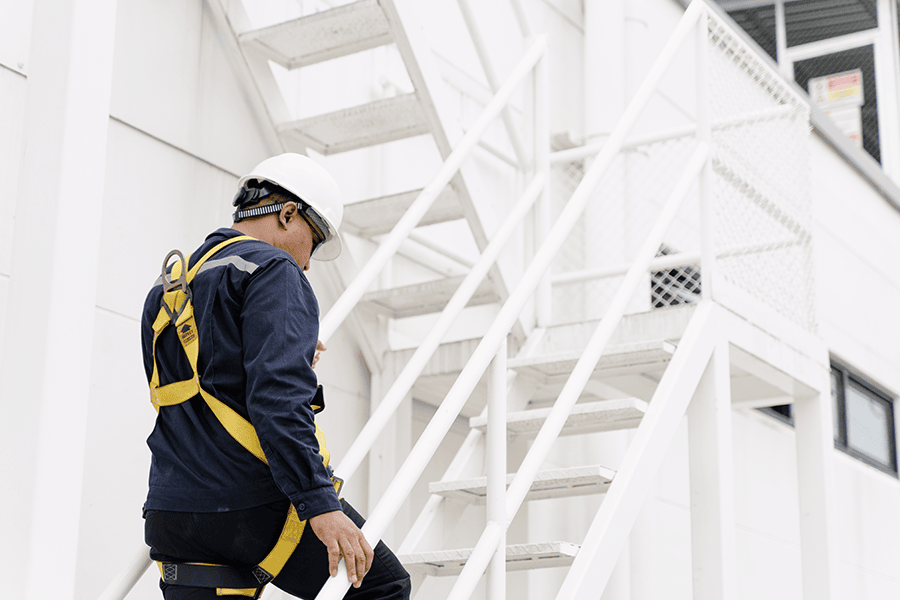
Fire escapes are a critical safety feature in New York City buildings and are legally required to remain in safe, working condition. Whether it’s a residential or commercial property, a damaged fire escape can put lives at risk and lead to serious violations under regulations enforced by the New York City Department of Buildings.
Due to NYC’s climate, including moisture, snow, and freeze-thaw cycles, fire escapes are constantly exposed to conditions that can weaken metal over time. That’s why early detection of damage is essential for maintaining compliance and ensuring safety.
At a Glance
- Fire escapes must always be structurally sound and accessible
- Rust, instability, and loose connections are key warning signs
- NYC building codes require regular maintenance and safe conditions
- Delayed repairs can lead to violations, fines, and safety risks
Why Fire Escape Maintenance Matters in NYC
In many NYC buildings, especially older ones, fire escapes serve as the primary emergency exit. Unlike modern interior systems, these exterior structures must handle both environmental stress and emergency use.
The New York City Department of Buildings requires property owners to keep fire escapes properly maintained. If a fire escape fails during an emergency or inspection, the consequences can include penalties, legal issues, and increased liability.
For both residential and commercial properties, proper maintenance helps:
- Ensure safe evacuation during emergencies
- Meet NYC compliance requirements
- Extend the lifespan of the structure
Key Signs Your Fire Escape Needs Repair
Fire escapes usually don’t fail suddenly. Most issues develop slowly over time and show visible warning signs before becoming serious. Identifying these early can help you avoid safety risks, violations, and costly repairs in NYC buildings.
Visible Rust and Corrosion
Rust is one of the earliest and most common signs of damage. It usually appears as flaking paint, discoloration, or rough metal surfaces. Over time, corrosion weakens the structure and reduces its ability to support weight.
If rust is left untreated, it can spread quickly and compromise the entire system.
Loose or Missing Bolts and Connections
Fire escapes rely on secure connections between metal components. If bolts, brackets, or welds become loose or go missing, the structure loses stability.
Even a small issue in one joint can affect the overall strength, especially during emergency use.
Unstable or Shaky Structure
A fire escape should feel solid underfoot. If it moves, shakes, or produces unusual sounds when used, it indicates structural weakness.
This is a serious concern and should be inspected immediately.
Damaged or Warped Stairs and Platforms
Stairs and platforms should remain level and intact. Bending, cracks, or uneven surfaces can make the fire escape unsafe to use.
These problems often develop due to long-term wear and NYC weather exposure.
Peeling Paint or Exposed Metal
Paint acts as a protective layer against moisture. When it starts peeling, the metal underneath becomes exposed and more vulnerable to corrosion.
Timely repainting helps prevent deeper structural damage.
Blocked or Obstructed Access
Fire escapes must remain fully accessible at all times. Any obstruction can delay evacuation during emergencies and may lead to violations from the New York City Department of Buildings.
NYC Inspection and Compliance Requirements
Fire escapes are often reviewed during building inspections, especially when evaluating exterior conditions. While Local Law 11 focuses on façade safety, fire escapes are commonly assessed as part of overall building maintenance.
Any visible damage, instability, or unsafe condition can lead to violations issued by the New York City Department of Buildings, requiring immediate repairs.
When Should You Schedule Repairs?
You should arrange repairs as soon as you notice any warning signs. Waiting for visible failure can lead to higher costs and safety risks.
It is recommended to schedule repairs:
- When rust or corrosion first appears
- If any part of the structure feels loose or unstable
- After harsh weather conditions
- During routine building inspections
Proactive maintenance is always more cost-effective than emergency fixes.
Residential and Commercial Fire Escape Safety
Both residential and commercial buildings in NYC are required to maintain safe fire escapes.
For residential properties, this ensures tenant safety and legal compliance.
For commercial buildings, it also protects employees, customers, and daily operations.
Neglecting fire escape maintenance can expose property owners to serious liability, especially in high-traffic buildings.
Final Thoughts
A fire escape is only effective if it functions properly when needed. In NYC, where regulations are strict and environmental conditions are demanding, regular inspection and timely repairs are essential.
If you notice rust, structural damage, or access issues, taking action early helps avoid violations, reduces long-term costs, and ensures the safety of everyone in the building.
FAQs – Fire Escape Repair in NYC
How often should fire escapes be inspected in NYC?
Fire escapes should be visually checked regularly and professionally inspected at least once a year. In NYC, property owners are responsible for ensuring safe conditions at all times under the New York City Department of Buildings guidelines.
Is rust on a fire escape a serious problem?
Yes, even minor rust can become a serious issue if ignored. Corrosion weakens the metal over time and can reduce the load-bearing capacity, making the fire escape unsafe during emergencies.
Can I use my fire escape if it feels slightly unstable?
No, an unstable or shaky fire escape should not be used. Even slight movement indicates structural weakness and requires immediate inspection and repair to avoid accidents.
Who is responsible for fire escape repairs in NYC?
The property owner is responsible for maintaining and repairing fire escapes. This applies to both residential and commercial buildings to ensure compliance and occupant safety.
Do fire escapes need repainting regularly?
Yes, repainting is an important part of maintenance. Paint protects the metal from moisture and corrosion, helping extend the lifespan of the structure and prevent costly repairs.
What happens if a fire escape fails inspection in NYC?
If a fire escape fails inspection, the New York City Department of Buildings may issue violations that require immediate correction. Delays can lead to fines and legal liability.
Are fire escapes included in Local Law 11 inspections?
Fire escapes are not the main focus of Local Law 11, but they are often reviewed during exterior inspections. Any visible damage can still result in required repairs.
Can blocked fire escapes lead to violations?
Yes, blocked or obstructed fire escapes are a direct violation of NYC safety regulations. They must remain fully accessible at all times to ensure safe evacuation during emergencies.
How much does fire escape repair cost in NYC?
Costs vary depending on the level of damage, size of the structure, and required repairs. Minor fixes are more affordable, while structural repairs or full restoration can be more expensive.
When should I call a professional for fire escape repair?
You should contact a professional as soon as you notice rust, loose connections, instability, or any visible damage. Early repairs help avoid bigger issues and keep your building compliant with NYC regulations.